WLS 027–030 polyurethane spray and cast foam
Insulation boards
Plaatisolatiematerialen
Plattendämmstoffe
Mats for thermal insulation
Mattenisolatiematerialen
Mattendämmstoffe
Loose-fill and blow-in insulation materials
Stort- en inblaasisolatiematerialen
Schütt- und Einblasdämmstoffe
Speciality products
Speciale producten
Spezialprodukte
Eigenschaften
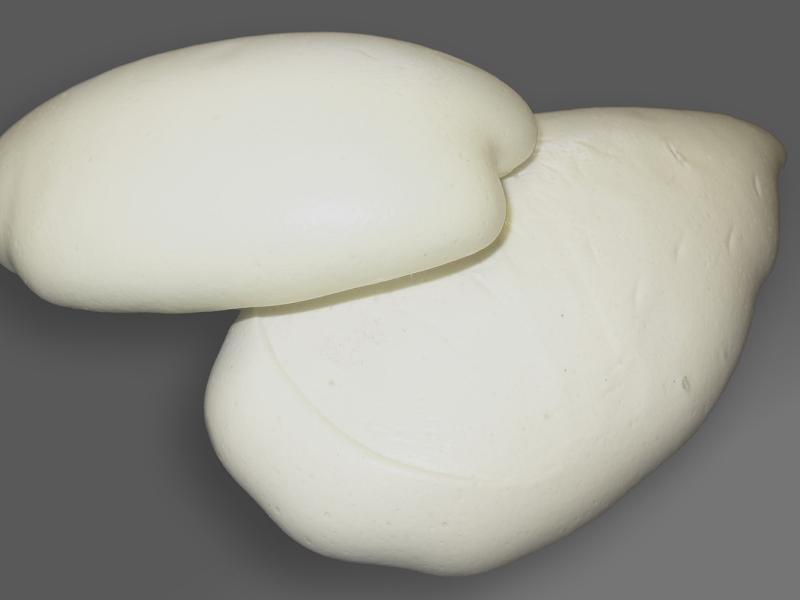
The single-component foam is primarily applied as a sealing foam for joints and other applications. The two-component foam is used for thermal insulation, as it cures more quickly and is stronger. The foam is applied in liquid form and cures after a few seconds. The material can be sprayed on and, as such, can be used, for example, for above-roof insulation or for insulating the underside of cellar ceilings and cellar access points. This allows for the levelling out of uneven surfaces, including the presence of pipework. The PU foam used here has WLS 030
In addition, PUR foam is used for cavity wall insulation, for example in double-skin masonry, and serves to stabilise the façade. The foam can spread evenly within the cavity wall, thereby ensuring seamless insulation. The PU pourable foam has a WLS rating of 027
Rohstoffe und Herstellungsverfahren
Raw materials: isocyanates, polyols (petroleum products), flame retardants (tris(2-chloroisopropyl) phosphate, tris(2-chloroethyl) phosphate)xix, catalysts, blowing agents (HFOs or water), stabilisers.
The foam is only formed at the point of use by mixing the components. There are two variants. In a single-component foam (assembly foam), isocyanates and polyols are already mixed inside the can. After spraying, the mixture reacts with the humidity in the air. In a two-component foam, the reactants are not mixed before spraying, but only upon application.
[i] General building approval: Z-23.32-1627; German Institute for Building Technology; 20 November 2006, Declaration of Performance in accordance with Annex III of Regulation (EU) No 305/2011 (Construction Products Regulation)
Technical Specifications
Property | Unit | Parameters | |
|---|---|---|---|
Cast foam (double-shell masonry) | Spray foam (cellar ceilings, etc.) | ||
| Thermal conductivity λB | W/(mK) | 0.027 | 0.030 |
| Bulk density ρ | kg/m³ | 55–65 | 40–50 |
| Heat capacity c | J/(kgK) | N/A | N/A |
| Building material class | -- | B2 | B2 |
| Water vapour diffusion resistance μ | -- | 110 | 110 |
| Primary energy content | kWh/m³ | 1140–1330 | 1140–1330 |
| Water-repellent effect | -- | yes | yes |
* Comparative U-value: 1.0 W/(m²K)
As local foam cannot usually be separated from other building materials, it cannot be recycled. The waste is therefore incinerated before it can be sent to landfill.
DIN 18159; Z-23.11-1553, Z-23.12-1794, replaced by DoP No.: 131304
Gesundheit und Ökologie
Polyurethane is a condensation product of isocyanates and polyols. Nothing is known about the toxicity of the end product; however, the raw materials are not harmless. Isocyanates are carcinogenic and can cause lung damage if inhaled.[i] During the manufacturing process, it is therefore essential to ensure that the monomers are fully reacted. However, in the event of a fire, the isocyanates may be released again, along with other substances such as formaldehyde and hydrogen cyanide[ii].
A blowing agent is required to foam the isocyanate-polyol mixture. Whilst HFC-containing blowing agents can largely be avoided in assembly foams, fully or partially halogenated chlorofluorocarbons are used in roof spray foams[iii]. The risk of spontaneous combustion can only be eliminated using HFC-based flame retardants, which is why the environmental risks associated with the substance are accepted.
Since 2023, fully or partially halogenated fluorocarbons (HFCs) have been banned across Europe. They have been replaced by water or HFOs (environmentally friendly). The cheaper HFOs deliver lambda values (nominal values) of 0.026–0.027 W/mK; PLUIMERS, a specialist insulation company operating across Europe, uses higher-quality HFOs and thereby achieves nominal values as low as 0.023 W/mK. Water-driven systems perform less well, with lambda values of 0.035–0.038 W/mK.
[ii] Ortner, Hensler; ‘Assessment of plastic fires – Substances arising from disruption to intended operation in accordance with Annexes II–IV of the 12th BImSchV’; Ref: 1/7-1515-21294; 7 November 1995
[iii] http://www.wecobis.de (accessed on 23 July 2012)
- good insulation performance
- seamless insulation
- no seepage, no settlement
- Stabilisation of front-facing, listed façades is possible
- high primary energy content
- Raw materials are based on finite resources
- many ingredients that are critical in terms of health and the environment