Roof
roof pitch
Drempel
Flat roof
Upper floor slab
Solid ceiling
timber-beamed ceiling
Nail binder
Attic conversion
External wall
Façade
Partition joint in a house
cellar wall
Ground floor
cellar ceiling
Stairway to the cellar
Solid ceiling
Cap ceiling
Timber joist floor/cavity
Special components
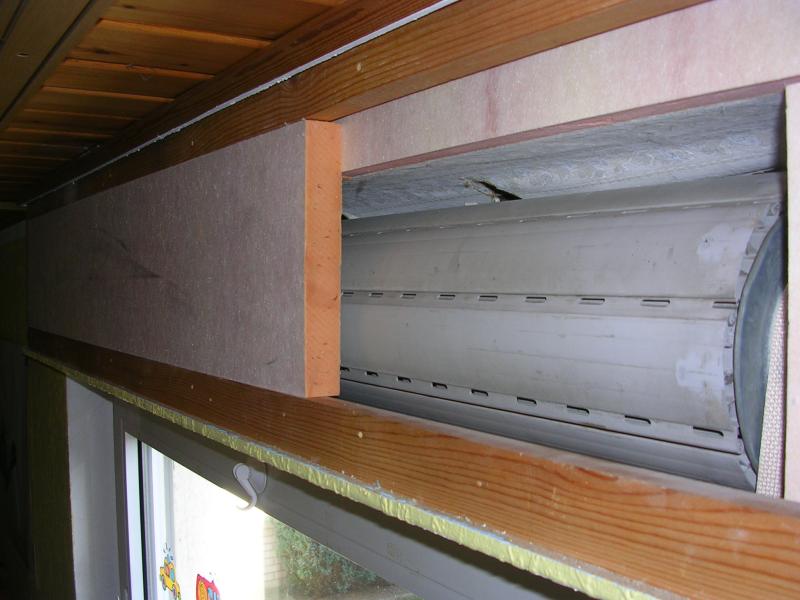
Roller shutter boxes fitted into house walls before 1975 are, in most cases, uninsulated. This means that the thermal break between the interior and the externally ventilated roller shutter box consists merely of a 4–5 mm thick sheet of plywood (plus wallpaper or paint). Although the uninsulated surface area of a single roller shutter box is relatively small, the total heat loss from a residential property across all uninsulated roller shutter boxes is relatively high. The consequences: high heating costs, a risk of mould and reduced comfort.
Cord passage in the roller shutter box:
The strap passage in the roller shutter box is a common cause of draughts and heat loss.
The energy-saving strap guide reliably seals this area and reduces air exchange between the interior and the roller shutter box.
An additional foam rubber seal ensures a neat, airtight installation.
The integrated brush seal is tested in accordance with EN 12114 (Class 1) and is particularly suitable for energy-efficiency refurbishment projects
The strap passage in the roller shutter box is a typical weak point for draughts.
The energy-saving strap guide with cover reduces air exchange between the roller shutter box and the interior, thereby improving energy efficiency.
The cover fits existing belt guides measuring up to 40 x 30 x 5 mm. An additional foam rubber seal ensures a neat, airtight installation.
The integrated brush seal is tested in accordance with EN 12114 (Class 1) and is particularly suitable for energy-efficiency refurbishment measures.
First, the roller shutter box is opened. Insulation boards are then installed at the top, bottom and, most importantly, towards the room. To do this, roll up the roller shutter and measure the space available for insulation. The insulation material used should be 5 mm narrower than the available space. It is advisable, as the next step, to cut the insulation layer into individual pieces. It is very important that the installation is airtight, both between the individual panels and against the masonry above and the cover below or inside. Acrylic or silicone materials are suitable for this.
Please note:
If you opt for standard neoprene underlay mats, bear in mind that these are only thermally effective – i.e. they only provide effective thermal insulation – if they are joined seamlessly on all sides. This task should be carried out by a professional. Furthermore, these neoprene mats are, unfortunately, rather thin and do not provide particularly good insulation.
Which insulation materials are suitable?
As there is limited space available in the roller shutter box, insulation materials with very low thermal conductivity, such as aluminium-laminated polyurethane or phenolic resin insulation, should be used in the greatest possible thickness. The thicknesses can also be varied depending on the available space.
A helpful video from the Energy Saving Commissioner, Carsten Herbert
Brush seal with aluminium profile
There are gaps between the roller shutter curtain and the box through which draughts, insects and cold air can enter the roller shutter box.
The brush seal with aluminium profile reliably seals this area and reduces both draughts and the entry of insects.
The aluminium profile is weather-resistant and the durable polyamide bristles are particularly suitable for energy-efficiency refurbishment projects.
The greatest possible thickness of the best possible insulation material (with the lowest thermal conductivity) should be selected. This is determined by the space required for the roller shutter box.


All the benefits at a glance
Improved thermal insulation:
If the so-called heat transfer coefficient (U-value) of the box was previously approx. 5 W/(m²K) (watts per square metre per kelvin), the insulation work can reduce this to around 0.6 W/(m²K). This represents a thermal improvement of around 90 per cent for the roller shutter box.
Lower heating costs:
If all roller shutter boxes are insulated, this measure can reduce heating costs throughout the house by up to 5 per cent.
Further benefits:
- Comfort is enhanced due to higher temperatures on the inside of the external walls
- Draughts are eliminated
- Mould growth is prevented, as the inside surfaces of the roller shutter boxes become warmer and therefore drier
- CO₂ emissions are reduced
- You can also insulate roller shutter boxes yourself
- The work involved is minimal
Time required: one afternoon per roller shutter box (considerably less from the 10th onwards), depending on your personal DIY skills
Costs/cost-effectiveness:
Depending on the level of difficulty and the specific tradesmen’s services required, the cost is around €100 per insulated roller shutter box. This corresponds to a payback period of between 4 and 6 years. If you carry out the work yourself, the measure pays for itself in less than a year!
This measure is not eligible for separate funding (unless there is a relevant local authority funding scheme).
Can I insulate them myself?
Yes, insulating roller shutter boxes is a typical DIY project and can be carried out bit by bit on your own. This reduces the cost to a maximum of €15 per roller shutter box, as only material costs are incurred.


