Calor Blown-in Insulation WLS 051
Insulation boards
Plaatisolatiematerialen
Plattendämmstoffe
Mats for thermal insulation
Mattenisolatiematerialen
Mattendämmstoffe
Loose-fill and blow-in insulation materials
Stort- en inblaasisolatiematerialen
Schütt- und Einblasdämmstoffe
Speciality products
Speciale producten
Spezialprodukte
Eigenschaften
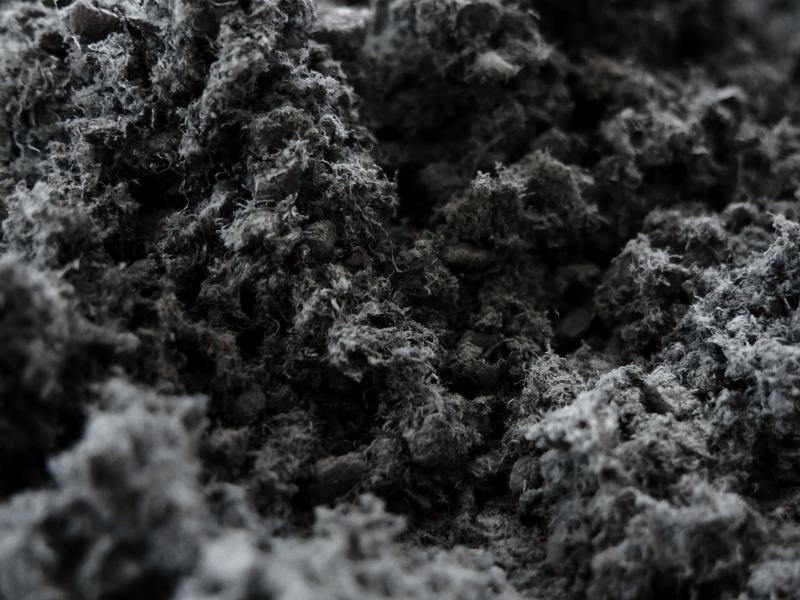
CALOR is an innovative insulation material made from helical leather fibres that can be worked into a homogeneous form. It offers excellent sound insulation, regulates humidity and ensures a comfortable indoor climate. CALOR is normally flammable and self-extinguishing. Its thermal insulation properties also make CALOR an ideal form of heat protection in summer, for example in roof structures. As it is manufactured in Europe without the use of water and with minimal energy consumption, it is particularly environmentally friendly and is perfectly suited for blow-in insulation in new and existing buildings, in industrial facilities and for acoustic measures. As a fibrous product, it does not settle and is suitable for insulating timber-beamed ceilings, sloping roofs, rafters, external walls, partition walls and for internal insulation in existing buildings as well as prefabricated buildings.
Other areas of application include its use as a filling material and as sound-insulating fill in new and existing buildings, as well as in prefabricated buildings.
Rohstoffe und Herstellungsverfahren
The high-quality leather offcuts, mainly from the production of leather seats and leather interiors in the automotive sector, are collected and stored on site before being sent to the nearby industrial plant for further processing. There, the ‘raw material’ is inspected and processed accordingly in the production facility specifically designed for this purpose. No additives are mixed in; the fibre derives its excellent properties solely from the innovative finishing process.
| Property | Unit | Parameters | |
| Thermal conductivity λ_(limit) DIN EN 12667 | W/mK | 0.041 | 0.040 |
| Thermal conductivity λB DIN EN 12667 | W/mK | 0.051 | |
| Bulk density ρ | kg/m³ | 125–140 | 35–110 |
| Sound absorption coefficient αs DIN EN ISO 11654 | 1 | 840 | |
| Sound absorption class | A | ||
| Building material class DIN EN 13501-1 | E | ||
| Water vapour diffusion resistance μ | 1.8 | 1–2 | |
| Specific flow resistance DIN EN ISO 9053-1:2019-03 | Pa s/m | 1780 | 270 |
| Length-dependent flow resistance DIN EN ISO 9053-1:2019-03 | kPa s/m² | 17.8 | |
The product can be extracted from the component as a single grade and recycled.
AbZ/ General Type Approval Z-23.11-2140 – DIN EN 12667 – DIN EN ISO 11654 – DIN EN 13501–1 – DIN EN 12086 –
DIN EN ISO 9053-1:2019-03 – DIN EN 15101-1 Annex B2 and Annex B3 – EAD 040005-00-1201 Annex B and Annex C
Sound absorption test report P-BA 82/2022
Legal provisions §§:
Blown-in insulation is only considered insulation within the meaning of building regulations if it has been installed by specialist contractors who have been trained in its handling by the relevant manufacturer and are included on a list. If installed by a DIY enthusiast themselves, the material is insulating but, from a legal perspective, does not constitute insulation. In the event of damage (e.g. fire), this could lead to problems with insurance companies. Furthermore, any subsidies are not available for structures in which self-installed blow-in insulation has been fitted. Even in the case of ‘KfW-x buildings’ or new builds, these insulation materials must not be included in the calculations made by energy consultants or architects.
Gesundheit und Ökologie
The leather fibres we use are supplied to us by our own affiliated factories for upcycling. The leather meets the highest standards and comes exclusively from the automotive supply industry. Looking at the supply chain, Calor is made from 100 per cent residual materials; leather is already a waste product of the food industry and, without upcycling, would be left to rot in a landfill. At the end of its life cycle, Calor can be vacuumed up or collected and returned to production. As it is a purely natural product, health risks, allergies and the like can be largely ruled out. Its ability to absorb and release moisture creates a healthy and pleasant indoor climate. Furthermore, with its excellent sound-absorbing properties, it is highly effective at eliminating or reducing unpleasant noise.
- Good availability of waste materials, very short transport distances
- Good availability
- Very good sound-absorbing properties
- Self-extinguishing
- Easy to compact, no sifting
- 100 per cent sustainability from waste materials
only average insulation values